Creating a children's storybook means bringing a world to life, and at the heart of that world is usually a character or two. For young readers, recognizing their favorite character on every page is crucial. It builds trust, makes the story easier to follow, and deepens their connection to the narrative. One helpful guideline for achieving this is the 70/30 rule in character design.
What is the 70/30 Rule Anyway?
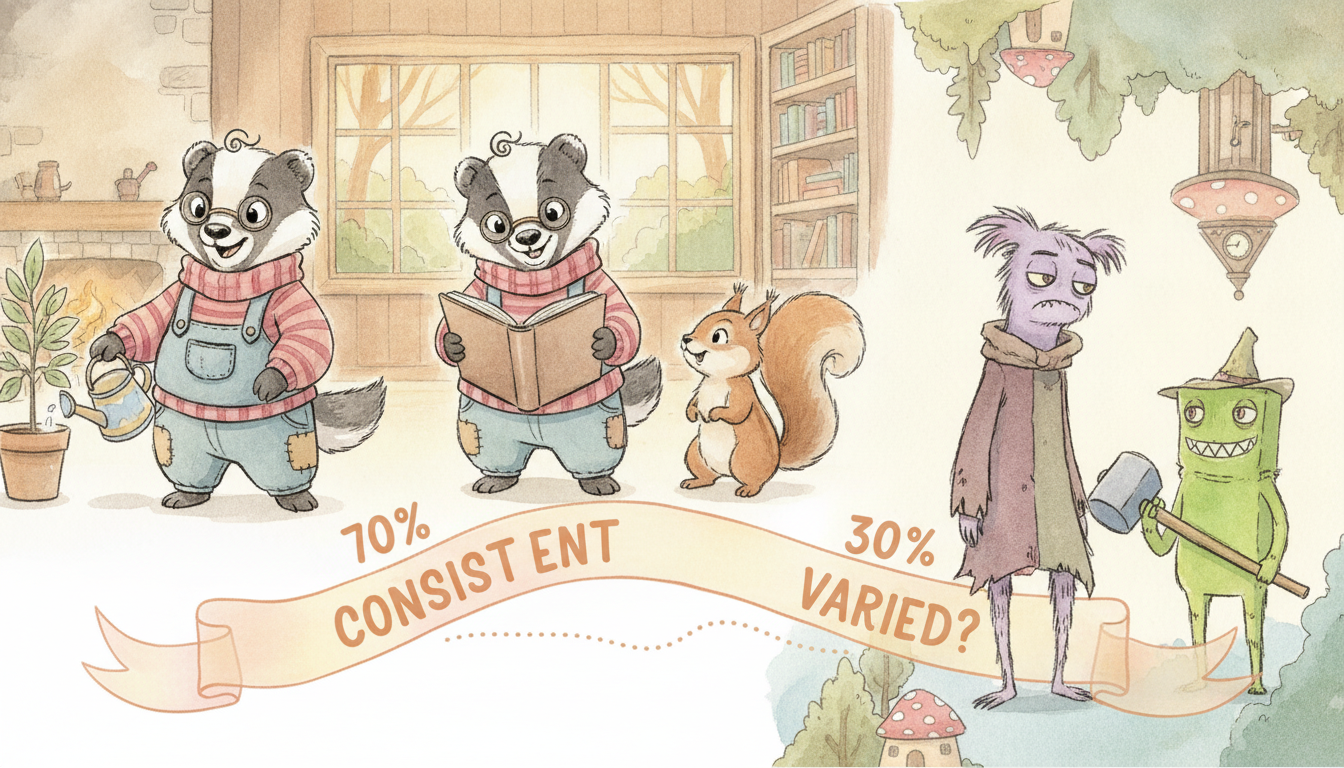
The 70/30 rule in character design is a guideline suggesting that 70% of your character's visual elements should remain consistent across all illustrations, while 30% can vary. This variation allows for depicting emotion, action, or different perspectives without losing the character's core identity. It is less about strict percentages and more about maintaining recognizable traits while allowing for dynamic storytelling.
Why Consistency Matters for Young Readers
Children rely heavily on visual cues. If a character looks different from one page to the next, it can be confusing and pull them right out of the story. Think about how a toddler might point out a beloved character in a book, even if it's just a small part of a busy scene. That instant recognition comes from consistent design. When a child can easily track a character, it not only deepens their emotional connection but also helps them follow the plot and understand cause and effect, which is so important for early literacy development. A consistent character illustration builds trust and familiarity, making the reading experience more enjoyable and effective for learning.
Applying the 70/30 Rule to Your Storybook Character
To apply this rule, start by identifying the '70%' elements of your character. What are the absolute must-haves? This might be a specific hair color, a unique ear shape, a particular outfit, or a distinct body silhouette. These are the core features that define your character and should rarely change. Next, consider the '30%' variations. How will your character show surprise, sadness, or excitement? Can their posture change to indicate shyness or bravery? These adaptable traits add personality without sacrificing identity. A good way to test this is to draw your character in a few different scenarios, showing various emotions or actions. Can you still tell it's the same character at a glance? Tools like Fablekit can make this process easier by helping maintain a consistent character across multiple book pages.
Beyond the Rule: Practical Tips for Character Design
To ensure your character remains consistent, consider creating a character 'turnaround' sheet. This involves drawing your character from various angles, like front, side, and back, to establish all their core features and proportions. This is helpful whether you're sketching by hand or working with digital tools. Pay close attention to small details, such as accessories or recurring patterns. A specific ribbon, a patch on a knee, or a unique pattern on a shirt can become part of that crucial 70% that makes your character instantly recognizable. Ultimately, think about what makes your character truly unique and lean into those elements, whether it's their quirky smile, slightly oversized shoes, or perfectly messy hair.
How can I make my character consistent across many illustrations?
To make your character consistent across many illustrations, focus on maintaining core visual elements like unique features, colors, and proportions. Regularly refer to your character's established design to ensure these key aspects remain unchanged from page to page. Practice drawing the character repeatedly to internalize their look and feel. Remember that even small changes, like a slightly different eye shape or a shift in body proportions, can make a character look like someone new to a young reader. The goal is to allow for expressive movement and emotion while ensuring the character is always unmistakably themselves, which is key to how to design a kids story book effectively.
Frequently Asked Questions
What is the main purpose of the 70/30 rule in character design?
The main purpose of the 70/30 rule is to ensure a character remains consistently recognizable across various illustrations, while still allowing for expression and action. It helps maintain the character's core identity throughout a story, which is especially important for young audiences.
Why is character consistency important for children's books?
Character consistency is vital for children's books because it helps young readers easily follow the story, builds familiarity and trust with the character, and prevents confusion. When a character always looks the same, children can connect with them more deeply and track the narrative more effectively.
What kind of elements should be part of the '70%' consistent design?
The '70%' consistent design elements should include fundamental features like the character's overall body shape, hair color and style, distinct facial features (like eye shape or nose), and primary clothing or accessories. These are the core visual identifiers that should rarely change.
What can be included in the '30%' variable part of character design?
The '30%' variable part of character design includes elements that can change to convey emotion, action, or perspective. This can involve facial expressions, body posture, gestures, and minor variations in clothing or accessories that don't alter the character's fundamental appearance.