Many authors dream of bringing their stories to life visually. For children's book writers, this often means envisioning not just the words, but the pictures that will dance alongside them. Self-illustrating your own children's book might seem like a huge task, but it's a wonderfully rewarding journey. This guide will walk you through the practical steps to make that dream a reality.
Why Should an Author Consider Self-Illustrating?
Self-illustrating allows you to maintain complete creative control over your story, ensuring the illustrations perfectly match your vision. It can also save significant money on professional illustration costs, while helping you develop new skills. However, be prepared for a substantial time commitment and a learning curve as you hone your artistic abilities.
Finding Your Artistic Style and Tools
One of the most exciting parts of self-illustration is discovering your own artistic voice. Don't feel pressured to be a master painter from day one. Many successful children's books feature simple, charming styles, from clear line drawings to soft watercolors or vibrant digital art. Experiment with different mediums like colored pencils, crayons, or even free digital art programs. The key is to find what feels natural for you and suits the tone of your story. More important than intricate detail for young readers is consistency in how your characters look and how your backgrounds are presented across every page. This helps children recognize elements and follow the narrative easily.
How Do I Plan My Book Visually with Storyboarding?
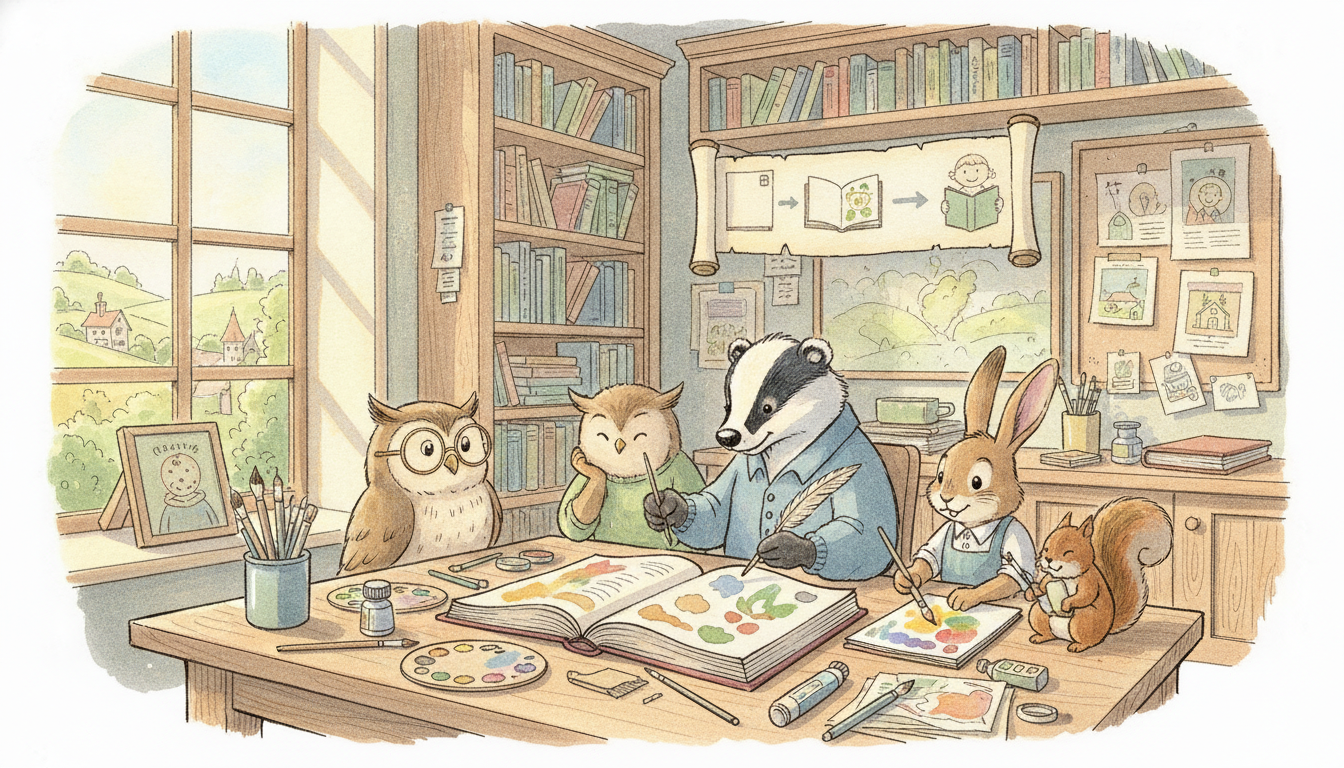
Storyboarding is your visual roadmap for the entire book. It involves creating a series of small sketches, one for each page, showing where the text will go and what the main illustration will depict. This helps you map out the flow of your story and ensure the visual narrative makes sense from beginning to end. Sketch your main character repeatedly to get a feel for their expressions and how they move. It is crucial that your characters look consistent from different angles and in various scenes, as this aids young readers in tracking the story.
Bringing Your Pages to Life: Techniques and Tips
When you start illustrating, begin with rough sketches. Don't aim for perfection on your first try. The refining process happens gradually, moving from loose ideas to more defined lines and colors. Think about your backgrounds. Often, simple backgrounds work best, providing context without distracting from the main characters and action. Focus on a clear foreground. Consider your color palette carefully. Warm, bright colors might suit a cheerful adventure, while cooler tones could convey a quiet, reflective moment. Tools like Fablekit make this easy, allowing you to focus on the story and the art, knowing your character will stay consistent.
What's the Best Way to Get My Artwork Ready for Printing?
Once your illustrations are complete, you'll need to digitize them. If you're working traditionally, scan or photograph your artwork at a high resolution, typically 300 DPI or more, to capture all the fine details. Then, use basic image editing software to clean up any dust or blemishes from scanning, adjust colors to ensure they look vibrant, and crop images to fit your page layout. Make sure your images are saved in common print-friendly formats like JPEG or TIFF, and understand the specific resolution requirements of your chosen printer.
Frequently Asked Questions
Can I really illustrate a children's book if I'm not a professional artist?
Absolutely. Many successful children's books feature simple, heartfelt illustrations. The key is to develop a consistent style and focus on clear storytelling through your art, rather than aiming for hyper-realistic detail.
How do I make sure my character looks the same on every page?
Start by drawing many studies of your character from different angles and with various expressions. Keep these as references. Use a character sheet to maintain consistency in their features, proportions, and color scheme throughout the book.
What's a good resolution for scanning traditional artwork for print?
For print quality, you should aim for a minimum of 300 dots per inch (DPI) at the final print size. If your artwork is smaller than the print size, scan at an even higher DPI to allow for scaling without loss of quality.
Should I use traditional art supplies or digital tools for self-illustration?
The choice depends on your comfort and desired aesthetic. Traditional supplies offer a hands-on feel, while digital tools provide flexibility for edits and color adjustments. Many artists combine both, creating traditional art and then finishing it digitally.